Articles

What Great Leadership Actually Looks Like [Thoughts From The Launch Of Our UK Leadership Excellence Open Programme]

May 21, 2026 - By Sean Hagger, Managing Director (International), Lean Management & Leadership (Pharmaceuticals & Sustainability Tech)

This month I attended the opening workshop of our Leadership Excellence Open Programme – the first time we’ve run this in the UK. It was two days in Bedfordshire with a cohort of leaders who’ve made a real commitment to developing their leadership over the next ten months.

It was great to be in the room. And there were some conversations and ideas shared over those two days that I think are worth sharing here.
Some of these came from Tony Flanagan, who facilitated the two days and will be guiding the cohort through the full ten-month programme. Some are thoughts I contributed myself. I hope you find them useful.

Why people give more than they take – and what happens when they don’t

Tony asked a question that is at the heart of leadership. Why do people choose to go above and beyond at work?
In his experience – and mine – it comes down to three things.
Purpose: a genuine connection between what someone does day-to-day and something that matters beyond the task itself. Passion for the craft: a pride in doing the thing well, whatever that thing is. And people: the quality of the relationships around them.
Any one of those can be enough to shift someone from going through the motions to genuine investment. But when none of them are present, you get something else entirely. You get people who show up, do the minimum, and go home. And over time, that quietly hollows out a team and an organisation.
The difference between managing and leading

One of Tony’s key points was the distinction between using people to get work done, and using work to develop people.

Most managers, if they’re honest, default to the first. The job is the point. The person is the resource. It’s faster, it’s safer, and in the short term it produces results.
But six months down the line, ask the person on the receiving end how they feel. Bored. Disengaged. No ownership, no curiosity, no growth. The job gets done – but that’s all that’s happening.
Leadership flips that. The person is the point. The job is the vehicle through which you build capability and help someone become more than they were. That’s not a soft idea – it has hard consequences, and it takes real investment. But it’s the only approach that builds teams who think, who own their work, and who stay.

The real cost of disengagement
This is something I talked about from my own experience, and it’s something I don’t think gets spoken about honestly enough.
When organisations grow, the instinct is often to add. More people, more process, more oversight. And for a while it works. But at some point you walk around and something feels off. Energy is low. Productivity doesn’t match the headcount. People are busy, but the output isn’t really there.
The cost of that isn’t just financial – though the financial cost alone is significant. It’s the drag it creates on the people who are pulling their weight. The quiet resentment. The gradual erosion of standards.

In my experience, the answer isn’t more process or tighter controls. It’s leadership. When you start leading people properly – giving them genuine ownership, genuine accountability, and genuine investment in their development – the picture changes. And often faster than you’d expect.

What happens when you hand control down
The other thing I’ve seen is how much energy gets wasted through over-control.
Budgets nobody feels ownership over. Decisions that have to travel up three levels before anything moves. People approving things they haven’t read because it isn’t really their call anyway. We tell ourselves we’re in control because we have systems and processes. But what we actually have is a workforce that’s learned not to care – because caring has been quietly designed out of their role.

The principle I keep coming back to is simple: give people genuine responsibility and they treat things differently. They think, they protect, they find ways to do more with less – because it matters to them personally. Most organisations are over-controlled. And all that control doesn’t produce better outcomes. It produces disengaged people who do the minimum required and nothing more.

I’m looking forward to watching this cohort develop over the next ten months – and to seeing the impact they have on their teams and businesses along the way.

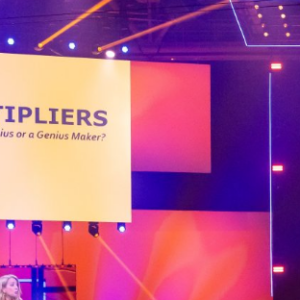
Here are some short videos that give you a view into some the conversation had at the workshop.
Sean Hagger
Sean Hagger

What Great Leadership Actually Looks Like [Thoughts From The Launch Of Our UK Leadership Excellence Open Programme]

Sean Hagger

Sean Hagger

Question of the Month – April 2026

Sean Hagger

Liz Wiseman

Are You A Multiplier Or A Diminisher?

Liz Wiseman

Leonie van Tonder

Exploring The Difference Between Delegation And Empowerment

Leonie van Tonder

Sean Hagger

Leadership By Permission: Reflections From Our Latest London Open Programme

Sean Hagger

Tony Flannigan

80% Of Your People Don’t Want To Be At Work. Here’s What You Can Do About It.

Tony Flannigan

Legitimate Leadership

Most Leadership Training Is Forgotten Within Weeks. Here’s What We’re Doing About It.

Legitimate Leadership

Ntsako Maswanganyi

One Organisation, Two Teams, Two Different Cultures…

Ntsako Maswanganyi

Legitimate Leadership

Report: How Leaders Can Use AI To Expand Capability And Strengthen Culture

Legitimate Leadership

Tony Flannigan

Question of the Month – March 2026

Tony Flannigan