A key problem facing leaders at work is to establish a sense of legitimacy for their leadership, to mobilise the consent of their people to being led by them. This only happens when leaders have a sincere and genuine concern for those in their charge and enable their people to realise the very best in themselves. In other words, managers have the right to demand delivery of their people, not because they pay them or because they are in a position of authority, but because they Care for and Grow them.
Care and Growth are the universal criteria for any Legitimate Relationship of Power.
The Legitimate Leadership Model originated from seminal research into trust in management in the South African gold mines in the late 1980s. Contrary to expectation, trust in management in the apartheid era was not consistently low, but varied immensely, both across mines and even in different shafts on the same mine. Trust in management was not found to be a function of working/living conditions, rates of pay, trade union activity, or the sophistication of the company’s human resources policies and systems. Rather, trust in management was granted or withheld on the basis of the employees’ perception of their leadership’s genuine concern for their welfare. The leadership of a mine was seen to be legitimate and worthy, or not, of support on this basis only.
Whether the management of any enterprise is trusted and viewed as legitimate, therefore, is ultimately a function of the intent of the immediate supervisor at any level in the hierarchy.

Over the past 25 years the original research findings have been applied in more than 250 diverse organisations around the world. Legitimate Leadership Partners and Associates work with clients globally both on-site and from their home locations in the United Kingdom, South Africa, Canada, Belgium and Finland.

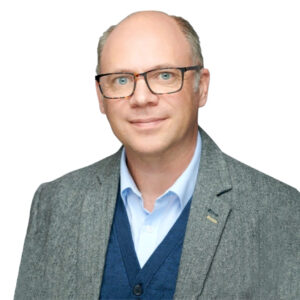
Will has been involved in leading cross-functional teams in technology, innovation, and fast-paced engineering environments for over thirty years. After spending his formative years in Radio Communications in the Army, Will led engineering teams in the automotive supply chain, developing innovative electronic control systems for automotive manufacturers. Will joined DENSO, the world’s largest automotive parts manufacturer, developing voice-activated navigation systems for Jaguar Land Rover and Volvo. This involved working with Japanese and Swedish counterparts, working in Gothenburg, and managing cross functional, cross-cultural teams.
A short spell at Smiths Aerospace and GE Aviation in Cheltenham saw Will develop battery technologies for the F35 Joint Strike Fighter airframe along with primary power systems for all three airframes. Will’s time at GE Aviation also included working abroad in Hong Kong setting up a new supply chain for a Boeing. This involved many leadership challenges, including cultural ones, which proved a fantastic opportunity to gain experience and mentor others. While working in Hong Kong Will successfully completed his MBA with the University of Warwick, which was immensely fulfilling and rewarding.
After leaving GE Aviation, Will worked for a Private Venture business designing and manufacturing automotive traction batteries for high-performance sports cars, including McLaren and Ferrari. After staying with the company for ten years, which saw the business change hands to Johnson Matthey Battery Systems and then to Cummins Electrified Power, Will eventually consolidated and led the new battery facility in Milton Keynes before leaving to join the National Composite Centre. While at the National Composites Centre, Will lead a team responsible for supporting small and medium-sized businesses and developing market entry strategies for existing and new functions.
Deeply passionate about developing the leaders of tomorrow and leading with legitimacy, Will would love to hear from you and understand your leadership challenges.
Will lives in Stratford Upon Avon with his wife Lorraine and enjoys long-distance running, reading, and shortwave radio.